The 7 Levels of Tack Spending (Your Horse Stops Noticing After 4)
In January 2012, the last saddle Pancho Villa ever owned sold at the High Noon Western Americana Auction in Mesa, Arizona for $718,000 — a world record at the time, against a presale estimate of $150,000 to $250,000. Three years later, a saddle ridden by the Crown Prince of Dubai at the 2014 World Equestrian Games raised AED 2.4 million ($653,234) at a charity gala, a figure Guinness World Records lists as the most expensive saddle ever sold at auction.
Neither saddle was bought for a horse. One went toward a museum display; the other into a collection. And that is the honest version of a story the tack industry tells at every price point below them: that spending more is caring more, and that your horse can feel the difference. Somewhere on the ladder between a $50 starter set and a six-figure collector’s piece, the money stops reaching the horse’s back and starts paying for leather quality your hands appreciate, resale stories, and how the saddle looks on the rack.
This article walks all seven levels of tack spending, from bare bones to absurd, and marks the line. The short version up front: your horse benefits from every dollar through Level 4. Returns thin out sharply at Level 5, and from Level 6 upward, a horse in a correctly fitted mid-range saddle and a horse in a five-figure custom one are having the same ride.
The seven levels at a glance
| Level | Price band (saddle-anchored) | What you get | Who it’s for | Does the horse benefit from the next dollar? |
|---|---|---|---|---|
| 1. Starter Budget | $50–$200 | Generic synthetic saddle, stiff fittings, plated bits | First lessons, trying horses, borrowed barns | Yes — almost any upgrade helps |
| 2. Entry Quality | $300–$800 | Functional construction, real or quality synthetic materials | New owners building a first kit | Yes |
| 3. Recreational Standard | $1,500–$3,500 | Proper trees, quality panels, modern synthetics, fittable saddles | Riders in regular work, 3–4 rides a week | Yes — this is where fit becomes achievable |
| 4. Enthusiast Grade | $3,500–$6,000 | Adjustable trees, contoured panels, entry models from the custom houses | Serious amateurs, one-horse owners keeping gear for decades | Diminishing — the last level where most horses gain meaningfully |
| 5. Competition Standard | $6,000–$10,000 | Full custom fitting, top-grade leather, discipline-optimized engineering | Horses in intense upper-level work | Marginal unless the horse’s workload demands it |
| 6. Elite Custom | $10,000–$25,000 | Months of handwork, finest materials, show-ring presentation | Riders buying for themselves, and resale value | No measurable gain over a fitted Level 5 |
| 7. Ultra-Luxury / Collector | $25,000+ | Provenance, prestige, waitlists | Collectors and investors | No — the horse has left the equation |
Level 1: Starter Budget ($50–$200) — the trap that teaches you the hard way
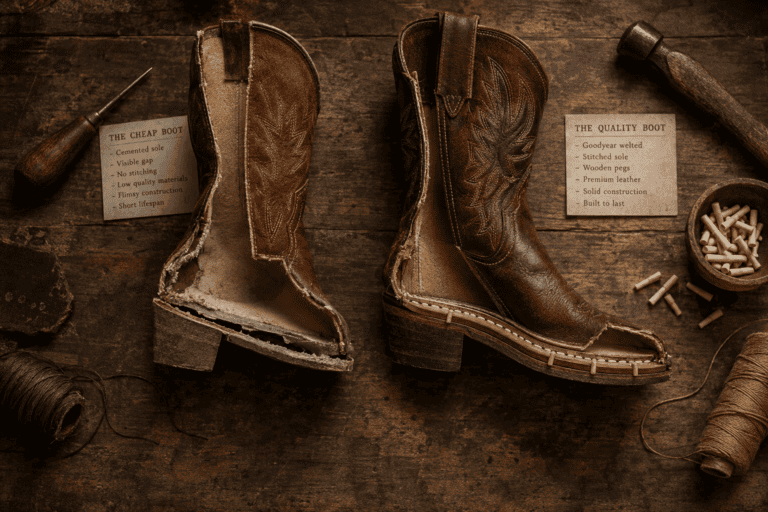
This is where almost everyone begins, and the trade counts on it. Fifty to two hundred dollars buys a “complete saddle set”: a synthetic saddle built to a price point rather than to a horse, a stiff halter, a plated bit that starts flaking within a season. The padding compresses, the stitching fails, and the tree — the structure that decides whether weight is distributed or concentrated — is the cheapest part of the build. Why the tree is the whole ballgame is a subject of its own, covered in why the saddle tree you can’t see decides everything.
The false economy is the real cost. A $100 saddle that fits nothing gets replaced, then replaced again, and the rider has spent $300 chasing a $100 saddle while the horse compensated for every flaw in it. Riders who came up through this tier describe the same arc: everything was harder, the horse resented the stiff gear, and once a first quality piece arrived, there was no going back.
What this level is actually for: trying the sport. First lessons, borrowed barn equipment, finding out whether horses are going to be part of your life. It is a bus stop, not a destination — the mistake is only in mistaking it for one.
Level 2: Entry Quality ($300–$800) — the first level where money reaches the horse
Three hundred to eight hundred dollars buys entry saddles from brands like Wintec, Collegiate, or Henri de Rivel, and basic leather bridles that survive more than one season. The construction is adequate, the padding is functional, the tree holds its shape. What you give up is adjustability, refinement, and custom fit. What you gain is the first product in the ladder that does not actively work against the horse.
That is worth pausing on: a few hundred dollars separates equipment that hurts a horse from equipment that doesn’t. It is the smallest meaningful jump in the entire ladder, and the one most consistently skipped in the imagination — riders leap mentally from “starter junk” to “premium someday” and overlook the functional middle that has equipped first-time owners for decades.
How to use it: buy the best-fitting entry saddle available at the price, not the best-looking one. Fit beats brand at every level, but nowhere more decisively than here.
Level 3: Recreational Standard ($1,500–$3,500) — the sweet spot your horse actually feels
This is the level the premium end of the market least wants you to settle into. Fifteen hundred to thirty-five hundred dollars buys a well-engineered modern synthetic saddle or an entry leather saddle with proper construction: a tree that distributes weight the way a tree is supposed to, panels with real substance, and enough structural options that a correct fit is finally achievable rather than lucky.
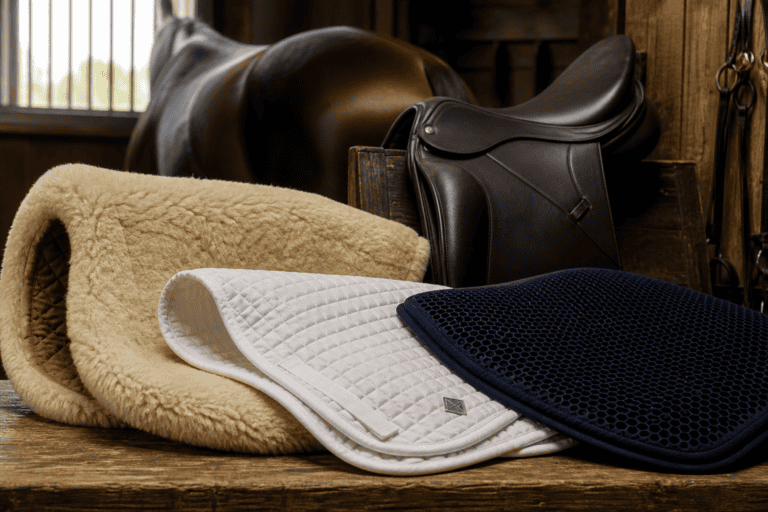
Two things matter most here. The first is weight — a synthetic saddle typically weighs roughly half of its leather equivalent, and the horse carries every ounce of the difference. The second is fit. Poor saddle fit is one of the best-documented sources of back pain, restricted movement, and compensatory muscle patterns in ridden horses; the research behind that, and what each stage of correct fit actually looks like, is laid out in the five levels of saddle fit. A horse does not know whether the flap above the panel is leather or synthetic. It feels pressure distribution, weight, and freedom or restriction. It does not feel a logo.
How to use it: put money into a professional fitting at this level. A $1,500 saddle fitted correctly beats a $6,000 saddle that sits wrong, every time, on every horse.
Level 4: Enthusiast Grade ($3,500–$6,000) — the last level that earns its keep
This is where the custom houses enter. Entry models from the French makers — Antares, Devoucoux, Voltaire Design — and fit-focused builders like Schleese start in this band, with adjustable trees, contoured panels, and material quality that visibly steps up. New saddles from the French houses broadly list between roughly $3,000 and $8,000 depending on model and options; how those price tiers break down, and what the secondhand market does to them, is covered in what a saddle is actually worth.
Longevity is the quiet argument for this tier. A well-made leather saddle here, maintained, outlasts the horse it was bought for — riders keep saddles from this band in regular use for decades. And because the engineering can genuinely conform to a horse’s back, professional fitting stops being optional and becomes the whole point. Buying a saddle at this level off the rack wastes the very capability you paid for. If your horse is the reason you’re here — croup-high, asymmetric, mutton-withered — the fitting question matters even more, and saddles for hard-to-fit horses goes deeper on which builders solve it.
For riders who are not competing at upper levels, this is the ceiling: the last price band where the horse still meaningfully benefits from every additional dollar.
Level 5: Competition Standard ($6,000–$10,000) — where returns start vanishing
Here is the line this article exists to mark. Six to ten thousand dollars buys the premium end of CWD, Devoucoux, and Butet — saddles built for horses in intense training, carrying competitive workloads at upper levels. The craftsmanship is exceptional and the discipline-specific engineering is real. For that specific horse, in that specific workload, the tier is justified, and an annual professional refit belongs in the budget, because a competition horse’s topline changes with conditioning.
But the honest word for the horse-side gain over Level 4 is marginal. The jump from $3,500 to $6,000 buys measurably better pressure distribution and freedom of movement. The jump from $6,000 to $10,000 is felt mostly above the saddle: the seat feels better to the rider, the leather feels better to the hand, the aesthetics satisfy the eye. The horse’s back reads largely the same story. A rider competing at local and regional levels who spends $9,000 instead of $5,000 has bought prestige and resale value, not soundness.
The question to ask before writing the check: is this for the horse, or for you in the warm-up ring? Both are legitimate purchases. Only one of them should be described as horse welfare.
Level 6: Elite Custom ($10,000–$25,000) — the prestige zone the horse cannot distinguish
Full custom builds and premium western show saddles occupy this band, with top builders’ show pieces commonly listing in the $15,000–$25,000 range new and custom orders running higher. The materials are the finest available, the handwork can take months, and the result is genuinely a work of art that also happens to be a saddle.
It is also the tier where the welfare framing finally breaks. Against a correctly fitted Level 5 saddle, the panels distribute pressure the same way, the tree clears the spine the same way, and the horse moves the same way. What changes is the rider’s seat, the presentation, and the resale story. Riders at this level are rarely being cynical — every sales conversation at this price is framed around the horse — but the horse would perform identically in the saddle costing a third as much. Buying here for your own comfort and pleasure is a legitimate choice. Telling yourself it’s for the horse is the industry’s favorite story, and it isn’t true.
Level 7: Ultra-Luxury and Collector ($25,000+) — the horse has left the equation
At the top of the ladder sits Hermès — hand-built in France, months-long waitlists, and a price position that makes competition-standard saddles look like impulse buys — along with the historical and limited-edition pieces whose prices are set by provenance, not performance. This is where the two saddles from the top of this article live: Pancho Villa’s silver-embroidered last saddle at $718,000 in 2012, and the Crown Prince of Dubai’s WEG-winning saddle at $653,234 in 2015. These are museum pieces that happen to have stirrups.
None of that is a criticism of collecting. If you are buying artistry, history, or an investment, this tier exists for you. What it does not do, has never done, and will never do is benefit a horse one fraction more than a properly fitted $5,000 saddle. And the psychology it makes visible — the belief that spending more means caring more — is the same psychology operating at every level above the $3,500–$6,000 threshold. The ultra-luxury tier just makes the absurdity impossible to ignore. Your horse doesn’t read labels. Your horse reads fit.
How to pick your level
- Match the level to the workload, not the dream. Riding 3–4 times a week for pleasure points to Level 3–4. Upper-level competition with a horse in intense conditioning points to Level 5. Nothing points to Level 6 except your own preferences — which is allowed, as long as it’s named honestly.
- Spend the fit money before the saddle money. From Level 3 upward, a professional fitting is worth more to the horse than the next price tier. Budget it in.
- Buy the used saddle one level up before the new saddle at your level. Depreciation on premium saddles is steep and immediate; a maintained secondhand Level 4–5 saddle frequently costs Level 3 money.
- Never buy any level off the rack when the horse is hard to fit. Adjustability and a qualified fitter matter more than the tier.
- Re-check fit annually, or after any change in the horse’s condition. Toplines change; saddles don’t follow on their own.
The ladder is built to make you climb. Your horse stopped climbing with you somewhere around Level 4 — and sometimes the best thing you can buy it isn’t on the top shelf. It’s in the middle of the tack shop, waiting for someone to fit it right.
References
- Guinness World Records — “Most expensive saddle sold at auction”: AED 2,400,000 ($653,234), Emirates Auction for the Al Jalila Foundation, Dubai, 25 November 2015. guinnessworldrecords.com
- Antiques and The Arts Weekly — coverage of the High Noon Western Americana Auction, Mesa, Arizona, 28 January 2012: Pancho Villa’s saddle sold for $718,000 against a $150,000–$250,000 estimate. antiquesandthearts.com
- Gulf News — Al Jalila Foundation gala report identifying the auctioned saddle as the one ridden by Sheikh Hamdan bin Mohammed Al Maktoum to victory at the 2014 Alltech FEI World Equestrian Games. gulfnews.com
- Saddle-fit research underpinning the fit-over-price argument — including the finding that the large majority of assessed saddles fit sub-optimally — is cited in full, with primary sources, in the cheap saddle problem and the five levels of saddle fit.
- Price bands reflect published list prices and typical market ranges as of September 2026 and will drift; treat them as bands, not quotes.
Hoof & Honest was not paid by any brand named in this article, holds no sponsorship or affiliate relationship with any saddle maker mentioned, and no brand was given advance sight of it. Every purchase price and auction figure traces to the published sources above; claims that could not be verified against a primary source were left out.
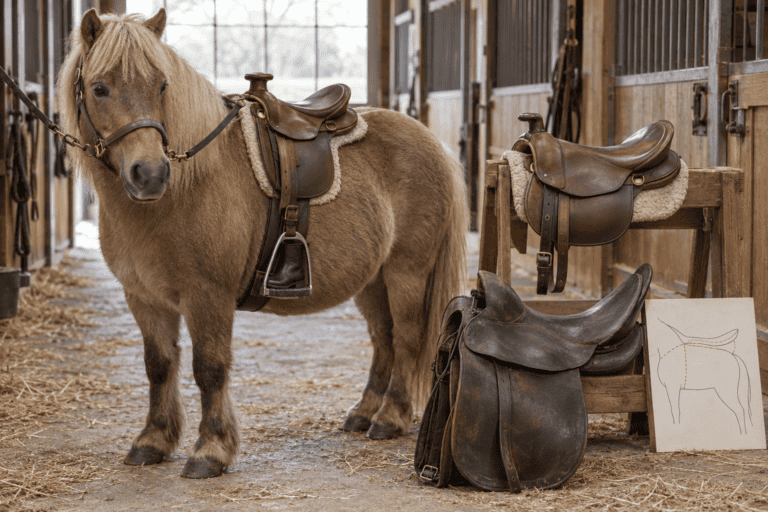
Related on Hoof & Honest: the five levels of tack room · kids’ saddles for ponies