7 Signs Your Horse Doesn’t Love You (Even If You Think They Do)
Hoof & Honest was not paid by anyone for this article, and it contains no affiliate links. Research completed October 2026.
Your horse nickers when you walk in, drops his head for the halter and stands like a statue while you brush him. So he loves you. Right? Maybe. Or maybe he has been sore for months and you have been calling it attitude. Maybe he is one brush stroke away from a kick you won’t see coming. Or maybe he stopped complaining a long time ago, and the quiet, perfect horse everyone at your barn envies is the one you should be worried about.
That gap, between what an owner believes a horse is feeling and what the horse is actually signalling, is where riders get hurt and where horses quietly shut down. Pain gets written off as attitude. A horse that has stopped reacting gets called a saint. Below are seven signs, each backed by published research, that your horse is not as comfortable with you as you think, with one practical check for each. The last one is the hardest to accept, because it looks like the perfect horse.
A word on the title. Science cannot measure love, and horses do not experience relationships the way people do. What research can measure is whether a horse approaches or avoids, relaxes or braces, and whether its face and body show pain. Those are the signs this article is about.
The 7 Signs at a Glance
| # | Sign | What the research shows | Check you can do this week |
|---|---|---|---|
| 7 | Walks away when the halter comes out | Horses remember how a person treated them for at least eight months | Halter visits with no work attached |
| 6 | Pins his ears during grooming | About 5% of horses showed positive behaviour during routine grooming | Groom slower and ease off at the first sign of discomfort |
| 5 | Fights the bridle | 84% of trotters examined after a race had injuries in the bit area | Two-minute weekly look inside the mouth |
| 4 | Watches you with his left eye | Horses view angry faces with the left eye and remember who looked angry | Arrive calm; watch which eye he uses |
| 3 | Tight, strained face | The Horse Grimace Scale identifies six facial signs of pain | Compare a relaxed photo with a tacking-up photo |
| 2 | Clamped or lashing tail under saddle | Eight or more of 24 ridden behaviours point to likely musculoskeletal pain | Film ten minutes of riding and count |
| 1 | The perfectly quiet, “bombproof” horse | About one in four riding school horses studied showed a withdrawn, depression-like state | Watch him in his stall when nobody wants anything |
7. He Walks Away When the Halter Comes Out
You walk into the field with a halter over your shoulder and your horse turns his back. You walk in with a bucket and he meets you at the gate. Same person, same field, same horse. What changed is what he expects to happen next.
Horses keep that expectation for a long time. In a study published in Animal Behaviour in 2010, Carol Sankey and colleagues at the University of Rennes trained 23 young horses to stand still for handling. Eleven were given a food reward for getting it right; twelve were trained the same way with no reward. Six months later, with no training in between, the rewarded horses spent about 60% of a test period close to their former trainer, against about 15% for the unrewarded group. They also approached an unfamiliar person far more readily (about 39% of the time against about 7%). Eight months on, the difference was still there.
The oldest complete book on riding horses says the same thing in plainer language. Xenophon, writing in the fourth century BC, put it this way: “The one best rule and practice in dealing with a horse is never to approach him in anger.”
What to do: walk out with the halter and don’t use it for work. Scratch the withers, offer something he likes, unclip and leave. Do it more often than you ride, and you change what the halter predicts.
6. He Pins His Ears While You Groom Him
Most owners think grooming is the part their horse enjoys most. The French field study by Léa Lansade and colleagues (INRAE and the French Horse and Riding Institute, IFCE) suggests most horses disagree.
- 69 horses were observed during ordinary grooming by their usual riders in riding centres and sport stables.
- Only about 5% showed positive behaviour such as leaning in, relaxing or trying to groom back.
- Four times as many showed avoidance or threatening behaviour. IFCE’s summary puts the share showing some sign of discomfort or defence at about half.
- Professional riders’ horses showed as much discomfort as beginners’ horses. Experience made no measurable difference.
- In some sessions a horse’s teeth or hoof came within about four inches of the rider’s head or body, and very often the rider did not notice. Only 7% of riders wore a helmet while grooming.
The same research group then tested an adjusted method in which handlers learned to read the horse’s comfort and discomfort signals and changed what they were doing in response. As reported in The Horse, horses groomed that way sought contact with the handler and did not show defensive behaviour.
What to do: slow down. Find the spots he leans into. The moment his ears go back, his skin twitches or his head swings round, reduce the pressure or move on. Our guide to grooming brands that beat the expensive ones covers the tools; this sign is about how they’re used.
5. He Fights the Bridle
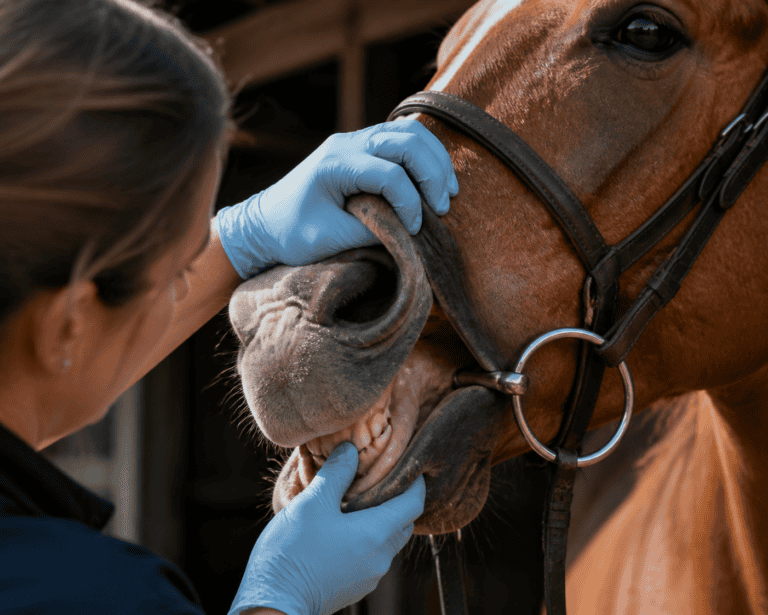
The bridle comes off the hook and his head goes up. Most riders treat this as a manners problem. The research suggests asking what he is trying not to put in his mouth.
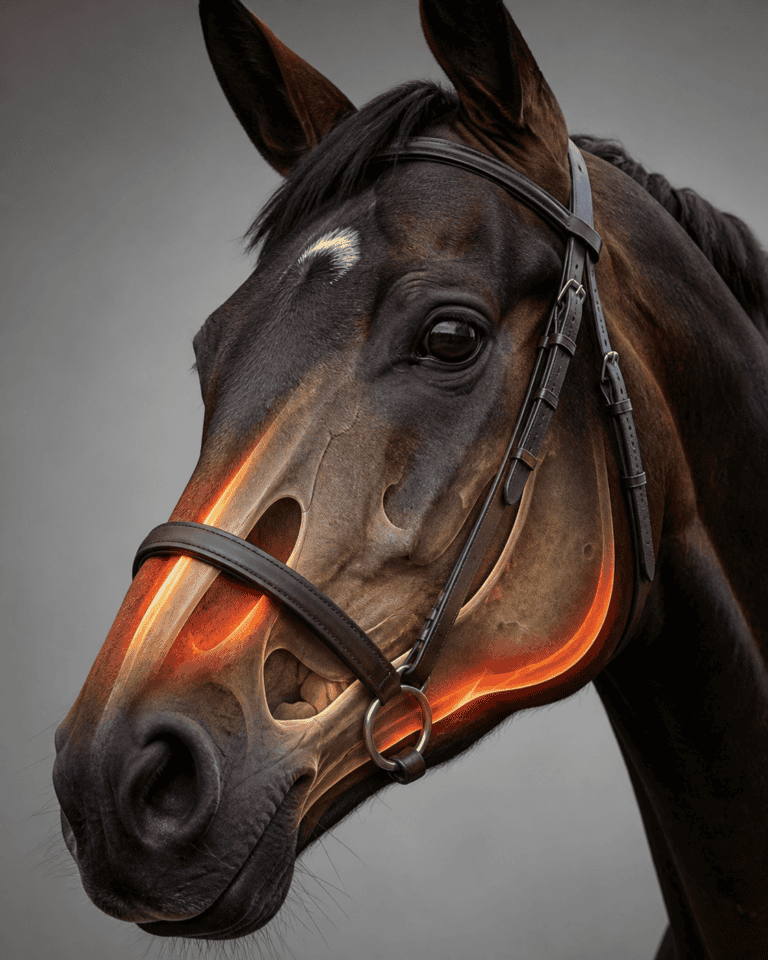
In 2019, a University of Helsinki team examined the mouths of 261 randomly selected trotters straight after racing, across 115 races at four Finnish tracks. 84% had lesions in the bit area: 21% mild, 43% moderate and 20% severe. From the outside, very little showed. About 2% had blood-tinged saliva and about 5% had blood on the bit. The researchers described the damage as easily overlooked because it is out of sight.
Those were racehorses examined immediately after a race, not leisure horses after a hack, so the percentage should not be applied to your horse. The lesson that does carry over is that a sore mouth can sit behind a horse who looks fine.
Xenophon considered willingness to take the bit so important that “a horse that refuses it is quite useless”, and his answer was to put the bit in properly and at the right height, not to force it.
What to do: once a week, use a flashlight and look at the corners of the lips and the bare gum between the front and cheek teeth where the bit sits. The Helsinki team suggested this kind of quick check as part of routine care. If you find sores, see your vet before you blame his manners. Our five levels of bit fit covers the Helsinki study in more depth, and nosebands your horse secretly hates covers the other strap that presses on the same area.
4. He Watches You With His Left Eye
When you walk up, does your horse face you, or turn his head so one eye does the watching? In horses, as in many species, what the left eye sees is processed mainly by the right side of the brain, the side associated with threat.
Two studies from the University of Sussex tested this with human faces:
- Smith et al., 2016 (Biology Letters): 28 horses were shown photographs of unfamiliar men looking happy or angry. With angry faces, the horses looked more with their left eye, their heart rate rose faster, and they showed more stress-related behaviour.
- Proops et al., 2018 (Current Biology): horses saw a photo of a person looking happy or angry. A few hours later they met that person in real life wearing a neutral expression, and they responded more warily to the people they had seen looking angry. The researchers described it as horses having a memory for emotion.
What to do: leave the bad day in the car. Take a breath at the gate, soften your face, and notice which eye he turns toward you over the next few weeks.
3. His Face Tightens When You’re Around
Most riders can read ears. Very few read the rest of the face, even though horses are stoic and a face can show pain before a horse limps. In 2014, a team from Italy, Germany and England published the Horse Grimace Scale in PLoS ONE. They filmed 40 young stallions the day before routine castration and again eight hours after. Observers who didn’t know which horses had had surgery scored still images of the faces. Only the castrated horses showed a significant rise in pain scores.
The scale uses six facial action units:
- Ears held stiffly backwards
- Orbital tightening (tightening around the eye)
- Tension above the eye area
- Prominent, strained chewing muscles
- Mouth strained with a pronounced chin
- Strained nostrils and a flattened profile
What to do: take two photos of his face, one while he dozes in the field and one while you tack up. Compare them against the six points. If the second photo looks like a different horse, something about that moment hurts or worries him. The scale was developed on post-surgical pain, so treat this as a prompt to look closer, not as a diagnosis.
2. His Tail Clamps or Lashes Under Saddle
Every barn has a mare who swishes through every transition and a gelding who clamps his tail when the girth goes on, and every barn has an explanation: she’s marish, he’s lazy, that’s just him. Veterinary orthopaedic specialist Sue Dyson has argued that the horse industry too often treats a grumpy, underperforming horse as normal instead of asking whether it hurts.
Dyson and colleagues developed the Ridden Horse Pain Ethogram (RHpE), a list of 24 behaviours seen under saddle, each with a strict definition. Examples include ears pinned back for at least five seconds, an intense stare, a clamped tail, and large, repeated tail swishing. A horse showing eight or more of the 24 is likely to have musculoskeletal pain. In the Saddle Research Trust’s summary, most of these behaviours are about ten times more likely in a horse in pain than in a pain-free one.
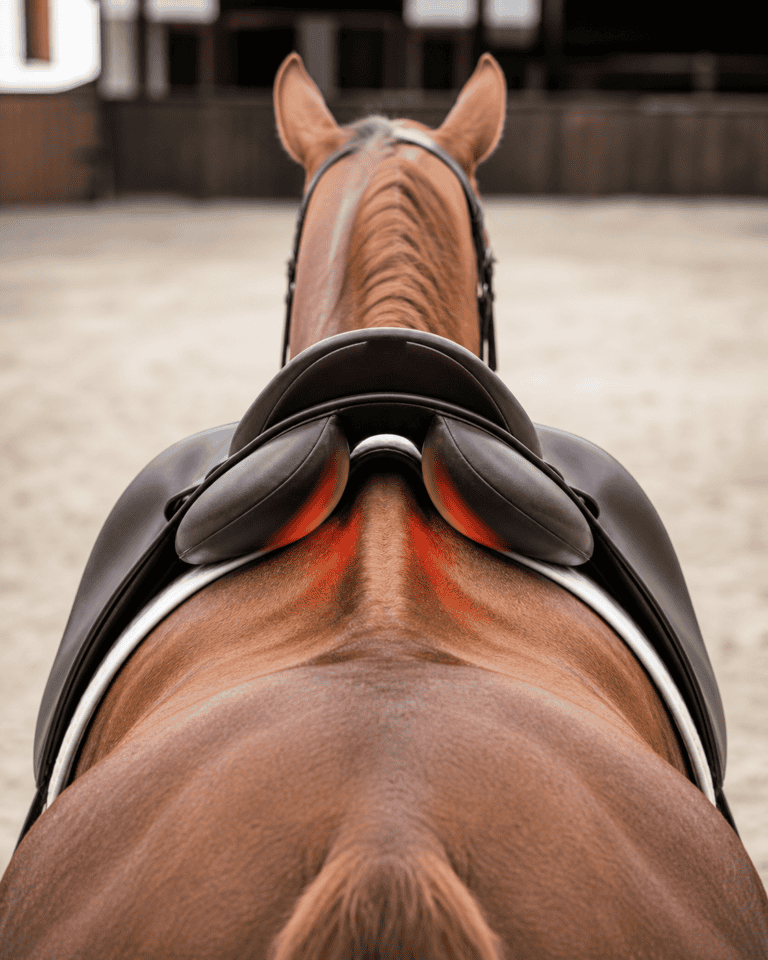
What to do: have someone film ten minutes of your normal ride. Watch it back with the sound off and count. Scoring takes practice and an owner’s count is not a diagnosis, but if you reach eight or more, stop calling it attitude and book your vet. Saddle fit is a common source of back pain; see the five levels of saddle fit.
1. He’s the Perfect, Quiet Horse
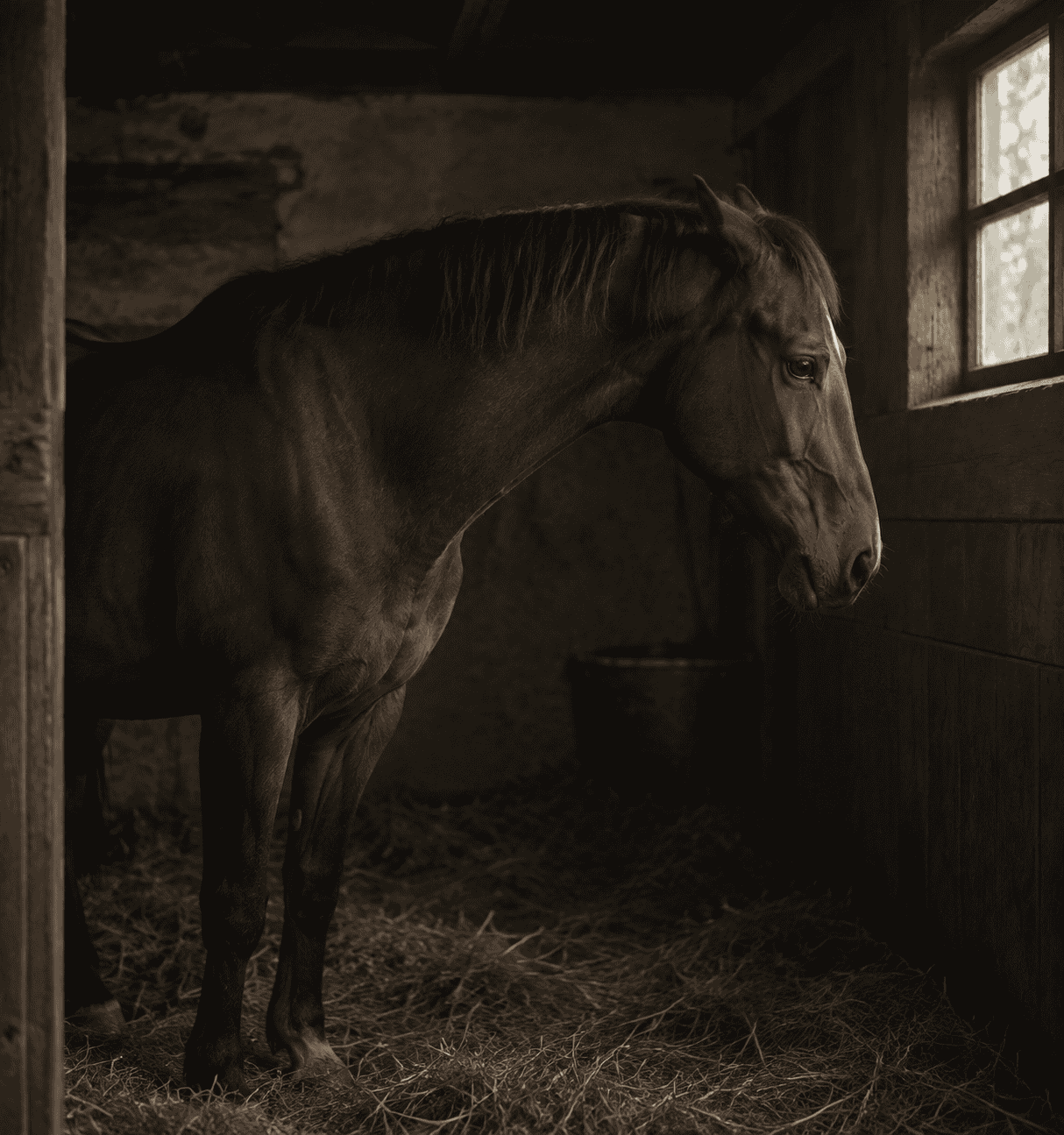
Every sign above is a horse complaining. This one is a horse who has stopped. He never pins his ears and never walks away. He stands in the corner of the stall, still, with his neck stretched out level with his back, his eyes open, staring at nothing.
French researchers led by Carole Fureix described this “withdrawn” posture in working riding school horses in a 2012 PLoS ONE study. Fourteen of 59 horses, about one in four, showed it: neck held level with the back, a fixed stare, ears held fixed and slightly back, and long periods of stillness. Compared with other horses from the same stables, withdrawn horses were more indifferent to a person approaching them and had lower cortisol levels. Low cortisol is a pattern sometimes reported in chronically stressed or depressed people and animals.
A follow-up study in 2015 offered sugar to 20 riding school horses. Horses who spent more time withdrawn ate less of it, which the authors read as a sign of anhedonia, a reduced capacity for pleasure. Horses scored as withdrawn five years earlier were still likely to show the behaviour.
A separate review by Carol Hall and colleagues (2008) asked whether horses can develop learned helplessness, where an animal learns that nothing it does stops something unpleasant. It found the condition had not yet been demonstrated in horses, but warned that some training and management practices give horses little or no control over aversive pressure.
Resting is not withdrawal. A resting horse usually has a hind leg cocked, a low, rounded neck, soft ears pointing sideways, a droopy lower lip and half-closed eyes.
What to do: watch him in his stall when nobody is asking him for anything. In work, give him choices, release pressure the moment he offers the right answer, and reward the try. If he spends long stretches in the withdrawn posture, talk to your vet about pain and to a qualified behaviourist about his routine.
So Does Your Horse Love You?
The honest answer is that science does not know. In a 2020 study in Applied Animal Behaviour Science, Paulina Lundberg and colleagues in Sweden tested horses in a separation-and-reunion procedure adapted from child attachment research. The horses were stressed when left alone and calmed when a person returned. They responded much the same whether that person was their owner or a stranger, and the authors concluded their results could not settle whether horses form a full attachment bond with a specific person.
What the research above does show is that horses read us, remember us, and show pain and stress in ways most owners are never taught to see. A horse that tolerates you and a horse that trusts you can look almost identical until you know where to look.
A One-Week Check
- Halter test: walk out with the halter twice this week without working him. Note whether he comes, waits, or leaves.
- Grooming: groom once at half speed and count ear-pins, skin twitches and head swings.
- Mouth: look at the bit area with a flashlight.
- Face: take the two photos, relaxed and tacking up, and compare them against the six Grimace Scale points.
- Ride: film ten minutes and count the RHpE behaviours.
- Stall: spend ten minutes watching him when nobody is asking anything of him.
- Call your vet if you reach eight or more ridden behaviours, find mouth sores, or see the withdrawn posture regularly.
What We Could Not Verify
- The exact share of horses showing discomfort during grooming. The published abstract reports about 5% positive and four times as many avoidant or threatening; the “about half” figure comes from IFCE’s own summary, which may use a broader definition.
- How the Helsinki lesion rate applies to leisure horses. The study examined trotters straight after racing; no comparable figure for non-racing horses is quoted here.
- How reliably owners can score the Horse Grimace Scale or the Ridden Horse Pain Ethogram without training. Both were validated with trained or blinded observers.
- Whether withdrawn horses are depressed in the human sense. The researchers describe a “depression-like” state; this is an interpretation of behaviour and physiology, not a diagnosis.
- That learned helplessness occurs in horses. The 2008 review explicitly says it had not been demonstrated.
- The practical checks in this article (halter visits, two-photo comparison, filming) are our recommendations built on the research, not interventions tested in these studies.
References
- Lansade L, Bonneau C, Parias C, Biau S. Horse’s emotional state and rider safety during grooming practices, a field study. HAL INRAE hal-02624790
- IFCE Equipedia. Grooming whilst respecting the horse’s well-being
- The Horse. Groom your horse with his comfort in mind
- Sankey C, Richard-Yris MA, Leroy H, Henry S, Hausberger M. Positive interactions lead to lasting positive memories in horses, Equus caballus. Animal Behaviour 79 (2010): 869–875. doi.org/10.1016/j.anbehav.2009.12.037
- Tuomola K, Mäki-Kihniä N, Kujala-Wirth M, Mykkänen A, Valros A. Oral lesions in the bit area in Finnish trotters after a race: lesion evaluation, scoring, and occurrence. Frontiers in Veterinary Science 6 (2019): 206. doi.org/10.3389/fvets.2019.00206; University of Helsinki press release
- Smith AV, Proops L, Grounds K, Wathan J, McComb K. Functionally relevant responses to human facial expressions of emotion in the domestic horse. Biology Letters 12 (2016): 20150907. doi.org/10.1098/rsbl.2015.0907
- Proops L, Grounds K, Smith AV, McComb K. Animals remember previous facial expressions that specific humans have exhibited. Current Biology (2018). doi.org/10.1016/j.cub.2018.03.035
- Dalla Costa E, Minero M, Lebelt D, Stucke D, Canali E, Leach MC. Development of the Horse Grimace Scale (HGS) as a pain assessment tool in horses undergoing routine castration. PLoS ONE 9(3) (2014): e92281. doi.org/10.1371/journal.pone.0092281
- Dyson S et al. Ridden Horse Pain Ethogram. AAEP coverage, EquiManagement; Saddle Research Trust RHpE summary sheet
- Fureix C, Jego P, Henry S, Lansade L, Hausberger M. Towards an ethological animal model of depression? A study on horses. PLoS ONE 7(6) (2012): e39280. doi.org/10.1371/journal.pone.0039280
- Fureix C, Beaulieu C, Argaud S, et al. Investigating anhedonia in a non-conventional species: do some riding horses display symptoms of depression? (2015). University of Bristol record
- Hall C, Goodwin D, Heleski C, Randle H, Waran N. Is there evidence of learned helplessness in horses? Journal of Applied Animal Welfare Science 11(3) (2008): 249–266. doi.org/10.1080/10888700802101130
- Lundberg P, Hartmann E, Roth LSV. Asking the horse in a separation–reunion experiment with the owner and a stranger. Applied Animal Behaviour Science 233 (2020): 105144. doi.org/10.1016/j.applanim.2020.105144
- Xenophon. On the Art of Horsemanship, trans. E. C. Marchant. Perseus/Perseids
Hoof & Honest was not paid for this article and has no sponsorships or brand deals. Every claim above traces to a published source, and claims we could not verify are labelled as unverified rather than quietly dropped. This article is not veterinary advice; if you suspect your horse is in pain, call your vet.