The 5 Levels of Bit Fit (Most Riders Never Pass Level 1)
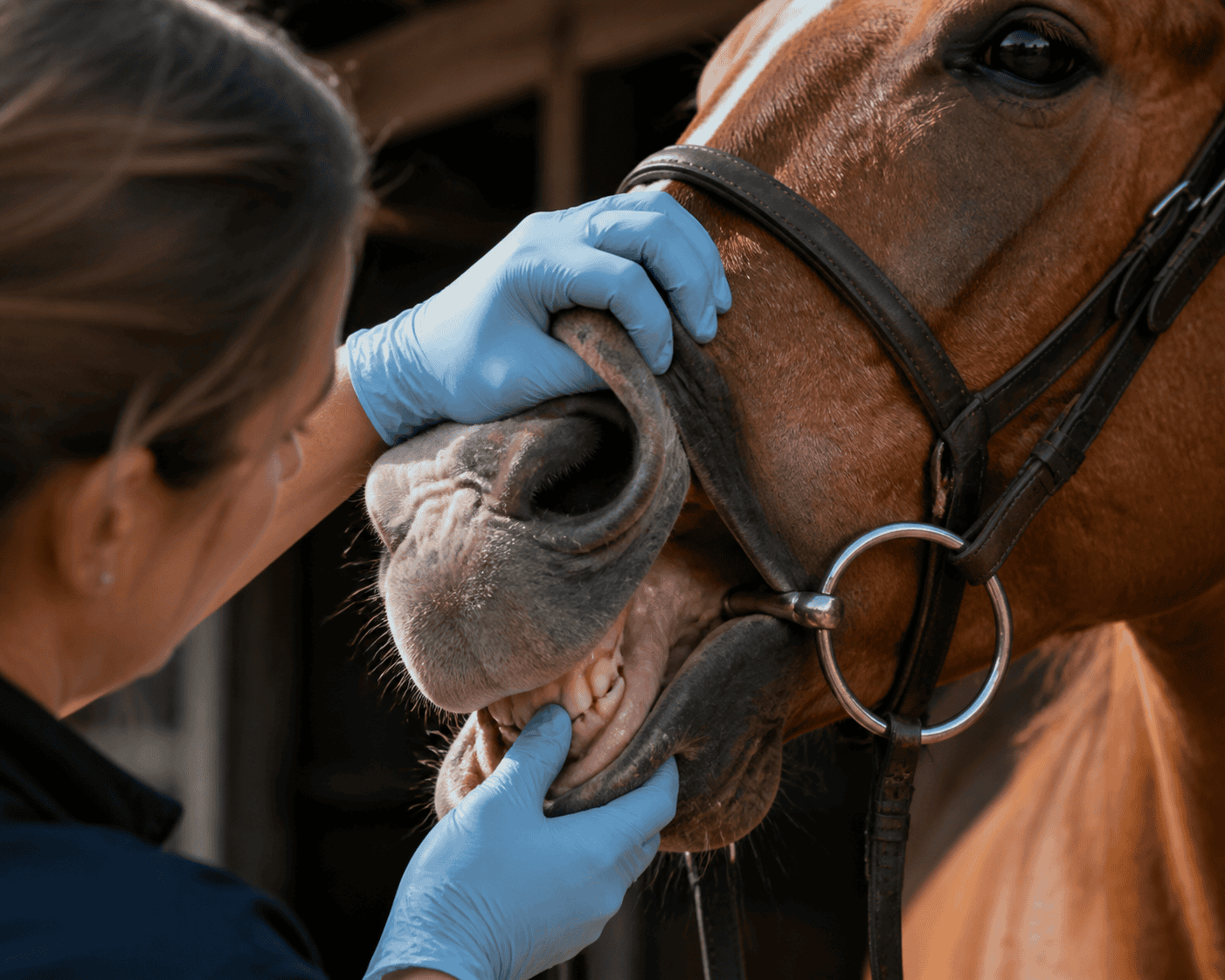
In 2019, a team from the University of Helsinki looked inside the mouths of 261 trotting horses minutes after they had finished a race. Using nothing more than a bright light and a gloved hand, they found acute lesions in the bit area of 219 of them, 84 percent. Sixty-three percent of all the horses examined had lesions scored moderate or severe. Blood visible from outside the mouth, the sign a race veterinarian actually watches for, showed up in six horses. Two percent.
The lead researcher, Kati Tuomola, told The Horse that visible blood is very likely only the tip of an iceberg where oral lesions are concerned. The damage a bit does is almost always out of sight, behind closed lips, and the behaviors that point to it are easy to file under “that’s just how he is.”
Proper bit fit has five levels: width, height, mouthpiece thickness, the anatomy inside the mouth, and the teeth. Most riders check the first one, when they buy the bit, and stop. This article walks through all five against the published research. The verdict is uncomfortable: in the largest measurement study of living horses’ mouths, about one bit in four was the wrong length, and more than one in four was too thick for the horse wearing it.
The five levels at a glance
| Level | What you check | What the research found | How often to recheck |
|---|---|---|---|
| 1. Width | Mouthpiece length against mouth width | 25.8% of horses had a bit that was too long or too short (Anttila et al., 2022) | When buying, and as the horse ages |
| 2. Height | Where the bit sits between incisors and cheek teeth | No controlled study; the “wrinkle rule” is convention | Every time the bridle or bit changes |
| 3. Thickness | Mouthpiece diameter against the space left by the tongue | 27.9% of measured horses had a bit too thick for their mouth; thin and thick bits each carried about 3.5 times the odds of moderate or severe lesions in event horses | When buying, and at each dental exam |
| 4. Inside the mouth | Bars, tongue, palate, and joint placement | 13.9% of double-jointed bits had a center link the same width as the horse’s lower jaw | At each dental exam |
| 5. Teeth | Wolf teeth, sharp points, hooks | Routine wolf-tooth extraction is still debated among veterinarians | Routine dental exams |
Level 1: Width
Width is where nearly every rider starts and where most stop. The traditional guidance is to leave roughly an eighth to a quarter of an inch between the bit ring and the corner of the lips on each side. The research version is tighter. Mirjami Anttila and colleagues at the University of Helsinki measured the mouths of 554 horses and ponies during routine dental care, then compared each mouth with the bit its owner actually used. They defined a bit as fitting if the mouthpiece was the same length as the mouth or up to 10 mm (about three-eighths of an inch) longer in total. That works out to no more than about three-sixteenths of an inch per side, which rules out the top of the traditional range.
Measured mouth widths ran from 95 mm to 165 mm, with an average of 131 mm, which is just over five and an eighth inches. Bits are sold in quarter-inch steps, so the practical job is picking the step that lands inside that small window.
| Labeled bit size | Approximate mouthpiece length |
|---|---|
| 4 in | 102 mm |
| 4½ in | 114 mm |
| 4¾ in | 121 mm |
| 5 in | 127 mm |
| 5¼ in | 133 mm |
| 5½ in | 140 mm |
| 5¾ in | 146 mm |
| 6 in | 152 mm |
Manufacturers measure differently, some between the rings and some along the curve of the mouthpiece. The Helsinki team measured along the back curve of the mouthpiece, which is what actually sits across the tongue.
How to measure mouth width
- Take a piece of baling twine or a wooden dowel and slide it into the mouth where the bit sits, at the corners of the lips.
- Mark the twine or dowel at the outside of each lip corner.
- Measure between the marks. That is the mouth width.
- Choose the size that is equal to that width or no more than 10 mm longer.
- Recheck as the horse ages. Mouth width correlated positively with age in the study.
A bit that is too long slides sideways and rubs the lip corners, and on a jointed bit it lets the joint shift toward one side, where it can pinch the tongue and the bar. A bit that is too short rubs the outside of the lip corners and presses the cheeks in against the edges of the cheek teeth. Of the 422 bits measured, 10.9% were too long and 14.9% were too short.
Width matters. Treating it as the whole job is like buying shoes by length alone.
Level 2: Height
Height is where the bit sits vertically, set by the cheekpieces. The usual rule of thumb is one to two small wrinkles at the corners of the lips. There is no controlled study behind that number, and it breaks down quickly across individual horses.
- A horse with thick, fleshy lips can show several wrinkles when the cheekpieces are carrying almost no tension.
- A thin-lipped horse can show a single wrinkle under real pressure.
- Some horses have a short distance from the corner of the lip to the muzzle, and on them the wrinkle count says very little about where the bit sits on the bars.
| What you see | Likely problem |
|---|---|
| Bit knocks against the incisors; horse plays with it constantly or pushes it around with the tongue | Hanging too low |
| Lip corners pulled tight at rest; horse resents bridling or gapes when the rein is slack | Sitting too high |
| Rub marks or loss of pigment at the lip corners | Height, width, or both. The event-horse study recorded lip-corner depigmentation, which prolonged bit pressure can cause. |
Most riders who check height do it once, the day the bridle is first fitted. Recheck it any time the bit, the bridle, or the noseband changes.
Level 3: Thickness
This is where the research turns against a long-held belief. Thick mouthpieces are widely sold as the kind option, on the reasoning that a larger contact area spreads the pressure. The physics is right. What it leaves out is how little room there is.
In 2021, the same Helsinki group examined 208 event horses right after the cross-country phase and analyzed risk factors in 174 of them. Compared with horses in a middle-thickness bit, horses in thin bits and horses in thick bits both had roughly three and a half times the odds of moderate or severe lesions.
| Mouthpiece thickness | Approx. in inches | Odds of moderate or severe lesions |
|---|---|---|
| 10–13 mm (thin) | ⅜–½ in | 3.5 times the reference (95% CI 1.4–8.7) |
| 14–17 mm (middle) | ½–⅔ in | Reference group |
| 18–22 mm (thick) | ¾–⅞ in | 3.4 times the reference (95% CI 1.4–8.0) |
The reason shows up in the measurement study. With the mouth closed, the distance between the upper and lower jaw at the bit position averaged 28.9 mm, a little over an inch, and ranged from 20 to 46 mm. Most of that is tongue: measured tongue thickness averaged 15.8 mm. When the researchers subtracted tongue thickness, the space left for a bit averaged 14 mm. Among the 43 horses where they could compare that space with the bit the owner used, the average spare room was 0.3 mm, about the thickness of three sheets of paper. Twelve of those 43 horses, 27.9%, wore a bit thick enough to compress the tongue.
No horse in the study had room for a bit thicker than 22 mm, and the authors advise against anything over that. A thicker bit is only milder if the mouth has room for it. When it does not, the bit sits on the tongue all the time, and a horse trying to escape that pressure may open the mouth, lift the tongue over the bit, or retract it. If you want to see which designs horses tolerate worst and best, our breakdown of the bits horses hate and the ones they’ll thank you for covers mouthpiece shapes in detail.
One caution on reading these numbers: a separate study of Finnish trotters by the same team found no link between bit thickness and lesions. The thickness effect has been shown in event horses, not in every population.
Level 4: Inside the mouth
Level four means looking at what the bit rests on. Three structures vary a great deal from horse to horse, and each changes which bit will suit.
| Structure | What varies | What it means for the bit |
|---|---|---|
| Bars (the toothless gap in the lower jaw) | Covered by only 1–2 mm of mucosa, roughly a sixteenth of an inch. Some horses have rounded bars, others sharp-edged ones. | Sharp bars concentrate rein pressure. A center link or joint sitting directly over the bars can pinch. |
| Tongue | Thickness ranged from 9 to 22 mm in the Helsinki measurements | A thick tongue cushions the bars but leaves less room, so the mouthpiece must be thinner. Horses with little room may do better with a shaped or tongue-relief mouthpiece. |
| Palate (roof of the mouth) | Hard palate depth varied from 5 to 27 mm in a study of 52 sedated horses | On a low palate, the joint of a single-jointed bit can rise into the roof of the mouth under rein pressure. |
Jointed bits add one more measurement. The width of the lower jaw between the bars averaged 29.5 mm. When the center link of a double-jointed bit is about the same length as that width, the joints can land right on the bars and act like a nutcracker. In the measurement study, 13.9% of the center links checked were within that danger range. Bar lesions were also strongly linked to bit type in the event horses:
| Bit type (event horses) | Horses with bar lesions |
|---|---|
| Unjointed | 40% (8 of 20) |
| Basic double-jointed | 10% (5 of 52) |
| Formed double-jointed | 8% (6 of 78) |
| Single-jointed | 5% (2 of 40) |
Two more findings are worth knowing. Oral dimensions were smaller in mares than in geldings, and mares carried about twice the odds of moderate or severe lesions in the event study. Ponies had the smallest mouths but, in that sample, a lower risk of lesions than warmbloods and coldbloods. Horse owners in the measurement study chose bit thickness mainly by breed and did not appear to account for sex at all.
The bit does not work alone. A tight noseband can hold the mouth shut over a bit that does not fit, and in one survey a common reason riders gave for using a noseband was to stop the horse putting its tongue over the bit. If that sounds familiar, it is worth reading what the noseband sitting just above the bit is actually doing.
Level 5: Teeth
Everything above sits on the teeth. A horse can have a bit of the right width, height, and thickness, and still find it painful if the mouth underneath has a dental problem.
Wolf teeth
Wolf teeth are the vestigial first upper premolars, small teeth that sit just in front of the cheek teeth, close to where the bit rests. Millions of years ago, the ancestors of the modern horse used them for grinding. Estimates of how many horses have them vary widely. A standard veterinary dentistry text gives a range of about 13 to 32 percent, while a review of 306 Thoroughbred yearlings in Kentucky found erupted first premolars in 72.9% of them, rising to 90% by 18 months of age. They usually erupt between six and twelve months.
Whether to remove them is not settled. Some veterinarians extract every wolf tooth before a horse is first bitted. Others remove only the ones that interfere with the bit. Either way, the decision belongs to your veterinarian, and a horse that has one removed needs time off bitted work while the socket heals.
Points and hooks
Horses’ cheek teeth keep erupting through life and wear into sharp edges and hooks. A bit that is too short, or a noseband that presses the cheeks inward, pushes soft tissue against those edges. Equine dental practices commonly recommend exams every six to twelve months, depending on the horse’s age, diet, and history. Ask for bit fit to be checked at the same appointment; the measurements in the Helsinki study were all taken during routine dental care.
Signs the bit doesn’t fit
In 2020, veterinary welfare scientist David Mellor coined the term “bit blindness” for how thoroughly bit use, and the behaviors that come with it, have been normalized over the four thousand years horses have worn them. Mellor argues against bits in general, and not every reader will go that far. The behaviors linked to bit discomfort in the veterinary literature, which Mellor reviews in detail, are still worth knowing whatever your view on bits, because each one is routinely written off as a training problem:
- Head tossing or shaking when contact is taken up
- Opening or gaping the mouth
- Tongue over the bit, out the side, or pulled back behind it
- Grabbing the bit with the teeth or leaning on it
- Resisting bridling, or raising the head away from the bit
- Excess chewing, mouthing, or grinding the teeth
- Rub marks, depigmentation, or sores at the lip corners
Any one of these can have other causes. Several together deserve a closer look at all five levels before anyone reaches for a stronger bit or a tighter noseband.
A five-minute bit fit check
- Measure mouth width with twine or a dowel, and compare it to the bit. It should be equal, or no more than 10 mm longer.
- Bridle the horse and look at the lip corners at rest. Note wrinkles, but judge height by where the bit sits, not by the count alone.
- Check mouthpiece thickness with a ruler or calipers. If it is over 17 mm, ask whether your horse has room for it. Nothing over 22 mm fit any horse in the Helsinki measurements.
- With the bridle off, look at the lip corners and the inside of the lips for rubs, depigmentation, or sores.
- For a jointed bit, compare the center link length with the width between the bars, or ask your veterinarian or dental provider to measure it.
- Book or confirm a dental exam, and ask for bit fit to be assessed at the same visit.
- Write down what you found and the date, and repeat when the horse’s work, age, or tack changes.
It is the same principle as our five levels of saddle fit: the check most people do is the easiest one, and the problems are further down.
The sport is starting to take notice
Bit fitting as a profession is young. The International College for Professional Bitfit Consultants says it started the first worldwide year-long bit fitting training in 2015. Its claim to be first is its own and has not been independently verified.
At the highest level, the most visible example came at the Paris Olympics in August 2024. Karl Cook helped the U.S. show jumping team win silver riding Caracole de la Roque, who jumps her rounds in a hackamore, a bridle that puts no pressure inside the mouth. She is not bitless full-time: according to Horse & Hound, Cook does her flatwork and warm-up in a Swales pelham and switches to the hackamore just before jumping. It is still a notable case of a rider adapting the equipment to the horse at an Olympic Games.
What this article could not verify
- The wrinkle rule. We found no controlled research on the ideal number of lip wrinkles. The guidance above is convention, not evidence.
- Left–right differences. Claims that individual horses can be several millimeters different between the two sides of the mouth circulate widely. The Helsinki measurement study found no significant average difference between the sides, and we could not find a published source for a specific figure, so we have not given one.
- Study populations. The lesion studies examined Finnish trotters after a race and event horses after cross-country, both straight after hard exertion. The measurement study was of Finnish horses and ponies. Pleasure horses in regular work may differ.
- Dental exam intervals. The six-to-twelve-month range reflects common practice recommendations, not a controlled trial. Your veterinarian may advise a different schedule for your horse.
Disclosure
Hoof & Honest was not paid for this article, received no products, and has no relationship with any bit manufacturer or bit fitting organization mentioned. No brand or organization saw the article before publication. Every figure traces to a published source listed below. Claims we could not verify were left out, or flagged in the section above.
References
- Tuomola K, Mäki-Kihniä N, Kujala-Wirth M, Mykkänen A, Valros A. Oral lesions in the bit area in Finnish trotters after a race: lesion evaluation, scoring, and occurrence. Frontiers in Veterinary Science 2019;6:206. doi.org/10.3389/fvets.2019.00206
- Tuomola K, Mäki-Kihniä N, Valros A, Mykkänen A, Kujala-Wirth M. Bit-related lesions in event horses after a cross-country test. Frontiers in Veterinary Science 2021;8:651160. doi.org/10.3389/fvets.2021.651160
- Tuomola K, Mäki-Kihniä N, Valros A, Mykkänen A, Kujala-Wirth M. Risk factors for bit-related lesions in Finnish trotting horses. Equine Veterinary Journal 2021;53:1132–1140. doi.org/10.1111/evj.13401
- Anttila M, Raekallio M, Valros A. Oral dimensions related to bit size in adult horses and ponies. Frontiers in Veterinary Science 2022;9:879048. doi.org/10.3389/fvets.2022.879048
- Evans FG, Lowder M. Examination of the depth of the equine hard palate. Journal of Veterinary Dentistry 2012;29:228–230. doi.org/10.1177/089875641202900403
- Van Lancker S, Van Den Broeck W, Simoens P. Incidence and morphology of bone irregularities of the equine interdental spaces (bars of the mouth). Equine Veterinary Education 2007;19:103–106. doi.org/10.2746/095777307X179882
- Weller D, Franklin S, Shea G, et al. The reported use of nosebands in racing and equestrian pursuits. Animals 2020;10:776. doi.org/10.3390/ani10050776
- Mellor DJ. Bit blindness. VetScript 2020;33(8):32–34. New Zealand Veterinary Association.
- Mellor DJ. Mouth pain in horses: physiological foundations, behavioural indices, welfare implications, and a suggested solution. Animals 2020;10:572. doi.org/10.3390/ani10040572
- Dixon PM, du Toit N. In: Easley J, Dixon PM, Schumacher J, eds. Equine Dentistry, 3rd ed. Saunders Elsevier, 2011 (wolf tooth prevalence).
- Equine canine and first premolar (wolf) teeth: review of dental charts of 306 Thoroughbred yearlings, Lexington, Kentucky. ResearchGate
- “Study finds high rate of bit-related lesions in trotting horses.” The Horse. thehorse.com
- “Olympic showjumping stories: Caracole De La Roque’s bitting dilemma.” Horse & Hound, August 5, 2024. horseandhound.co.uk
- US Equestrian athlete profile: Karl Cook. usef.org
- International College for Professional Bitfit Consultants, organization website. icpbc.com
Related on Hoof & Honest: The 5 levels of leg protection · The 5 levels of stable air quality · The 7 levels of tack spending