The Only 5 Bridle Brands You Can Still Trust (And Where They’re Really Made)
Advertising disclosure: this article contains affiliate links. If you buy through them, this site may earn a commission at no additional cost to you. Hoof & Honest was not paid by any brand named here, and no brand was given advance sight of this article.
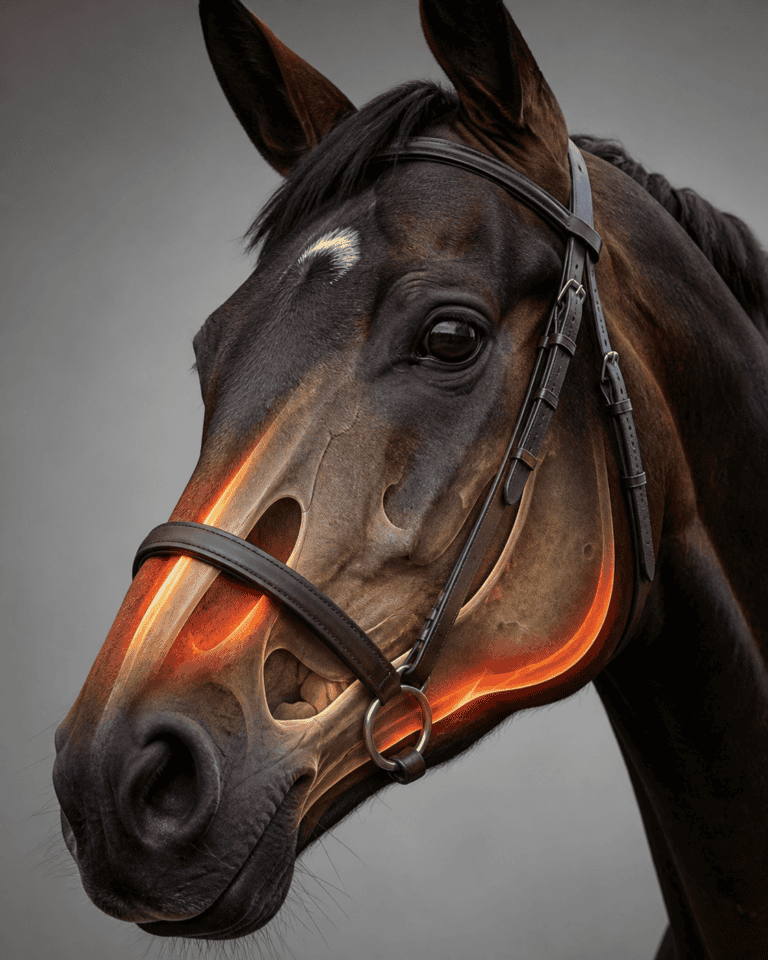
In 2015, a research team led by Rachel Murray laid calibrated pressure mats under the headpieces and nosebands of horses working in trot. The peak pressures showed up in the same places from horse to horse: behind the ears, at the front edge of the headpiece over the wing of the atlas, under the browband attachment near the jaw joint, and along both edges of the nasal bone. The team then redesigned the headpiece and noseband to sit off those spots. Under the headpiece, the horses’ usual bridles produced peak pressure about twice as high as the redesign, and in the redesigned bridle the horses flexed their knees and hocks more.
That study is the scientific case for the anatomical bridle, and it’s a big part of why nearly every brand now prints the word on its headpieces. This review found no industry standard that defines what a bridle has to do to be called anatomical. It also found no published independent pressure-mapping of any bridle from the five brands below. The word on the tag tells you what the brand intends. It doesn’t tell you what was measured, or where the bridle was made.
So this article checks five bridle brands, PS of Sweden, Antares, Dy’on, Stübben and Passier, against things a buyer can confirm before spending money. All five clear the two checks that matter most for the horse: a verifiable track record, and a pressure-relief design described specifically enough to check against your horse’s head. Where they split is disclosure. PS of Sweden lists India on its own product page, and Stübben says its bridles are made in northwest Spain. Passier’s CEO said in 2016 that the company has imported its bridles since 2007, and Passier doesn’t say from where. Only Antares ties its bridle leather to a named tannery. The brands appear below in the video’s order, from rock solid to the longest track record. On disclosure alone the order would look different, and the scorecard shows how.
How the five were checked
Every check below can be run from a browser, before a bridle is ever on the horse.
- A verifiable track record. A founding date and company history you can check against something other than the brand’s own ad copy.
- A specific pressure-relief design. “Cut back behind the ears with a recess over the first cervical vertebra” counts. “Anatomical” on its own doesn’t.
- Build location stated by the maker. Where the bridle is made, not where the brand is headquartered or the leather is tanned.
- Leather source stated by the maker. A named tannery or country, not “premium leather.”
To make the list, a brand had to clear the first two checks. The last two don’t decide the verdict, but they are where the brands differ most, so each one is scored and explained below.
The scorecard
| Brand | Founded | Specific design | Bridles made (per maker) | Leather source (per maker) | Verdict |
|---|---|---|---|---|---|
| 5. PS of Sweden | 2011 | Yes: wide headpiece with top cut-out, elastic Cradles | India (Pioneer product page) | Partly: “English or Italian” vegetable-tanned | Pass |
| 4. Antares | 2000 | Yes: Precision headpiece clears first cervical vertebra, FEI-approved | Not stated on bridle pages | Yes: Arnal tannery, Rodez, France, chestnut-tanned | Pass |
| 3. Dy’on | 1989 | Yes: Difference bridle moves the headpiece back off C1 | Partly: Basic lines use leather tanned in Kanpur, India | Partly: “Dy’on leather” for premium lines | Pass, with note |
| 2. Stübben | 1894 | Yes: Freedom headstall cut back around the ears | Northwest Spain | Not stated | Pass |
| 1. Passier | 1867 | Yes: ear recess plus cervical-vertebra recess | Imported since 2007 (CEO, 2016), origin not stated | Not stated | Pass, with note |
What they cost
| Brand | Example bridle | US price found | Where |
|---|---|---|---|
| PS of Sweden | Pioneer | $350 | PS of Sweden US store |
| Antares | Precision Anatomic Comfort | About $540 retail | US retailer listing |
| Antares | Signature Fancy Hunter (buffalo leather) | $242 | US retailer listing |
| Dy’on | D Collection Anatomic Flash | $368 to $650 | Varies widely by dealer |
| Stübben | Freedom 2500 to Freedom II Magic Tack | $530 to $695 | US dealer listing |
| Passier | Ingrid Klimke Snaffle / Marcus Ehning II | $369 / $535 | US dealer listing |
Prices were checked in September 2026 and change often. Dy’on shows how much the dealer matters: the same D Collection bridle was listed at $368 by one retailer and $650 by another.
Which bridle fits which horse
| Brand | Best for | Trade-off |
|---|---|---|
| PS of Sweden | Horses touchy at the poll; young horses (Pioneer) | Head shapes vary, and some buyers report fit problems |
| Antares | Riders who want to know exactly where the leather comes from | Two leather lines at very different prices |
| Dy’on | Horses with pressure at the base of the ears and C1 (Difference) | Build origin and dealer pricing both need checking |
| Stübben | Riders who swap bits often (Slide&Lock) | Leather source not published |
| Passier | Horses that go well in a simple, classic bridle | Bridle origin not disclosed |
5. PS of Sweden: the young brand that prints India on its own page
PS of Sweden was founded in Stockholm in 2011 by Karin Bjärle, who started it after failing to find a bridle that fit her own horse. Its first anatomical bridles came out in 2013, and retailers quoting the company say it has since developed more than 30 bridle models.
The Pioneer is the clearest example of the approach, and PS describes it in specific terms. The headpiece is extra wide with a cut-out at the top, meant to spread pressure instead of concentrating it. The noseband sits higher on the nasal bone and adjusts to three heights. The cheekpieces carry elastic Cradles, bands the bit rests on, which PS says let the bit spring rather than press statically on the teeth and jaw. It’s worth noticing that PS itself frames the benefit as something “many believe,” and this review found no study testing Cradles specifically. If you use them, PS says to detach them for dressage competition. How the bit sits in the mouth is its own subject, covered in the five levels of bit fit.
PS says the Pioneer is approved for competition in all disciplines in Sweden and under the FEI, and US retailers add USEF, USDF and British Dressage approval. The Pioneer lists at $350 on PS’s US store, and the company says it donates 5% of the profit on that bridle to World Horse Welfare.
Two disclosure details stand out. The Pioneer’s US product page lists “India” in its product details, the only origin information on the page. And PS describes its leather as English on some pages and Italian on others, while its bridle category page covers both: “English or Italian vegetable tanned leather.” None of that is a reason to avoid the brand. It is a reason to read the product page rather than the brand story. The same goes for the reviews: PS holds a 3.7 out of 5 on Trustpilot across 624 reviews, and most of the complaints there concern shipping, returns and customer service rather than the bridles.
Check current PS of Sweden bridle listings
4. Antares: the only brand that names its tannery
Antares was founded in 2000 in Charente-Maritime, France, by five saddlers, and it now runs a custom-saddle workshop near Saintes with more than 45 saddlers. It’s best known for saddles, but its bridle leather is the most transparent on this list.
According to Antares, its bridlework is made from French full-grain leather selected and developed for the brand by the Arnal tannery in Rodez. The hides are controlled for width and density, and they’re vegetable-tanned with a chestnut-based process that Antares says was developed for bridlework, to limit stretching over time. Apart from pigment, the grain isn’t altered. That is a tannery, a town, a tanning agent and a stated reason, which is more than any other brand here gives.
The design claim is specific too. Antares says its Precision headpiece was developed with vets and osteopaths and is cut to clear the first cervical vertebra, with two side pads meant to reduce pressure behind the ears. It’s FEI-approved for dressage, eventing and jumping. The Precision Anatomic Comfort retails for about $540, according to a US retailer listing.
Two cautions. First, Antares doesn’t state on its bridle pages where the bridles themselves are assembled, only where the leather comes from. Second, Antares also sells a Signature line, and US retailers list Signature bridles in buffalo leather from $242. That may be a perfectly good bridle, but it isn’t the Arnal-leather product described above. Ask which line you’re looking at.
Check current Antares bridle listings
3. Dy’on: a farrier’s chaps, and a two-tier leather story
Dy’on started with a pair of chaps. Belgian rider and farrier Philippe Dion needed full chaps he couldn’t afford, so he designed and sewed his own with help from his aunt, a seamstress. Sources put that first pair in 1986 and the founding of the business in 1989. By one retailer’s account of the company history, the first year produced one pair a week and the second year one pair a day. In 1994, riders who wanted matching tack got Dion into bridles.
The design case is strongest in the Difference bridle, built for horses with pressure at the base of the ears and over the first cervical vertebra. It combines headpiece and browband in one piece and moves the headpiece further back. Dy’on also gives a specific fitting rule for it: a whole hand should fit behind the base of the ears.
Sourcing is where the note comes in. Dy’on says its Basic collections, Working by Dy’on and La Cense, use buffalo leather vegetable-tanned in Kanpur, India. Its Premium collections use what it calls “Dy’on leather,” with no origin stated on that page. One US retailer says Dy’on bridles were first made in England, and an Irish dealer says the brand now manufactures mainly through partner facilities in India, with a smaller Belgian-made line. Some buyers have reported that newer India-made bridles don’t match older ones, though that comes from customer feedback rather than any test. Before paying premium-line prices, ask the dealer which collection and which factory. Why that question matters well beyond bridles is the subject of how a $30 pad and a $150 pad can share a factory.
Check current Dy’on bridle listings
2. Stübben: five generations, and a named bridle factory
Johannes Stübben founded a saddlery in Krefeld, on Germany’s Lower Rhine, on March 15, 1894. The shop was workshop, store and family home in one. In 1906 demand rose when Emperor Wilhelm II moved the 11th Hussar Regiment to Krefeld. By the regiment’s own lore, the move came after the city’s aristocracy complained there weren’t enough bachelors to dance at their balls, which earned the unit the nickname “Dancing Hussars of Krefeld.”
The company entered the US market in the early 1950s. In the early 1970s it set up a plant in northwest Spain for accessories, and Stübben says its bridles and leather accessories are still made there, with a long-standing partner operating under the name “Don Rodrigo.” In 2013, Johannes Stübben, the youngest son of Ralph Stübben, joined the management of the still family-owned business.
That makes Stübben one of only two brands here that name where their bridles are made. It doesn’t say where its leather comes from. On design, the Freedom line uses a cut-back, padded headstall around the ears and a removable flash system. Stübben’s Slide&Lock cheek fastening lets you change a bit without unbuckling anything, which matters more than it sounds if you switch bits often. US dealers list the Freedom 2500 at $530 and the Freedom II Magic Tack at $695.
Check current Stübben bridle listings
1. Passier: the longest history, and the least disclosure
Passier’s history is the most solid on the list. In 1867, Georg Christian Passier, regimental saddler to the Royal Uhlan Regiment No. 13, opened his own saddlery in Hanover and was entered in the city’s civil register on September 17 of that year. His son Ernst Heinrich Georg Passier, born in 1872, qualified as a master saddler and joined the business in 1901, which then traded as “G. Passier & Sohn, Court and Regiment Saddler.” US retailers describe Passier as the official saddler to the last German Emperor. Saddles are still made in Langenhagen, near Hanover.
The design case is specific. Passier says its Favorite snaffle bridle, developed with Olympic eventer Ingrid Klimke, has an anatomically shaped headpiece with padded ear recesses and an additional recess over the horse’s cervical vertebra to reduce poll pressure. It also sells a bridle named for show jumper Marcus Ehning. US dealers list the Ingrid Klimke Snaffle Bridle at $369 and the Marcus Ehning II at $535. Where that sits against the rest of a tack budget is covered in the seven levels of tack spending.
The note is about where the bridles come from. In a 2016 interview with The Horse Rider’s Journal, Passier CEO Dirk Kannemeier, the fifth generation of the founding family, said the company had found bridles and similar accessories too costly to produce itself and had been importing them since 2007. Passier doesn’t say where they’re made, and it doesn’t name a leather source for them. Some retailers still describe Passier bridles as handmade in Germany. This review couldn’t square that with the CEO’s statement and found nothing newer from Passier on the question. The history and the design hold up. If where your bridle is stitched matters to you, ask the dealer and ask for it in writing.
Check current Passier bridle listings
How to check a bridle before you buy it
- Find the country of origin on the product page or the tag, not the brand’s About page. Where the leather was tanned and where the bridle was made are two separate claims.
- Ask which leather line you’re buying. Several brands on this list sell a premium leather and a buffalo-leather line under the same name.
- Check the headpiece behind the ears and over the poll. That is where the 2015 pressure study found the highest peaks. Look for a cut-back or padded ear area, and follow the brand’s own fitting rule for the model.
- Check where the noseband sits against the edges of the nasal bone, and how tight it is. Our guide to noseband types and the pressure they carry covers both.
- Confirm competition legality for your discipline. Approval claims come from the brand or retailer, and some features, like PS of Sweden’s Cradles, have to come off for dressage tests.
- Read the exchange policy before you order. Head shapes vary, and a bridle that fits one horse perfectly can sit wrong on the next.
What we could not verify
These gaps are stated here rather than left out.
- Pressure performance. None of the five brands publishes independent pressure-mapping of its own bridles, and this review found none. The 2015 study tested a bridle designed by the research team, not a product from any brand here.
- Passier’s bridle origin. The import statement comes from a 2016 interview. Passier hasn’t said where its bridles are made, and this review found no newer statement. The video that goes with this article describes Passier production as kept under one roof in Germany. For bridles, the CEO’s statement contradicts that, and this article follows the CEO.
- PS of Sweden’s origin label. The product page lists “India” in its details without calling it the country of manufacture, so this article reads it as origin information and doesn’t go further.
- Dy’on’s manufacturing split between India and Belgium comes from a dealer, not from Dy’on. The reported quality drop in India-made bridles comes from customer feedback.
- Antares bridle assembly. Antares names its tannery but not where the bridles are put together.
- Passier’s appointment as saddler to the Kaiser is described by US retailers. Passier’s own history confirms the “Court and Regiment Saddler” name from 1901. This review found no primary document for the appointment itself.
- Prices and review scores change often. The figures here come from the sources named, as checked in September 2026.
Anonymous rider testimonials and “best bridle” roundups were left out entirely.
Related reading
The same checks, build location first, work across the tack room. The six riding boot brands you can still trust applies them to boots, and the seven girth brands you can still trust applies them to the strap that holds the saddle on.
References
- Murray R, Guire R, Fisher M, Fairfax V (2015). A Bridle Designed to Avoid Peak Pressure Locations Under the Headpiece and Noseband Is Associated With More Uniform Pressure and Increased Carpal and Tarsal Flexion, Compared With the Horse’s Usual Bridle. Journal of Equine Veterinary Science 35: 947–955. sciencedirect.com. Summary of pressure zones: horsesport.com
- PS of Sweden: Bridle Pioneer, US product page, design, price, origin detail and World Horse Welfare donation (checked September 2026). psofsweden.com. Bridle leather: psofsweden.com
- PS of Sweden: founding year and headquarters. tracxn.com. First anatomical bridles in 2013 and model count, as quoted by a retailer: canterburyequestrian.co.nz. Competition approvals, as listed by a retailer: elandlodge.com
- Trustpilot: PS of Sweden reviews (checked September 2026). trustpilot.com
- Antarès Sellier: company history and workshop. antares-sellier.com, antares-sellier.com
- Antarès Sellier: bridle leather (Arnal tannery, chestnut tanning). shop.antares-sellier.com. Precision headpiece: antares-sellier.com
- Antares US prices (checked September 2026): Precision Anatomic Comfort retail price, goldfinchfinetack.com. Signature line, farmhousetack.com
- Dy’on: Premium and Basic collections, leather sources. dyon.be. Difference bridle, as described by a retailer: kentucky-horsewear.com
- Dy’on company history: marystack.com, visionsaddlery.com. Manufacturing split, per an authorized dealer: equijumpltd.com. Customer quality concerns: justhorseriders.co.uk
- Dy’on US prices (checked September 2026): equizoneonline.com, dapperhorse.com
- Stübben: family history, Spanish bridle plant. stuebben.com. Management succession: stubbensaddles.com
- 11th Hussar Regiment (Germany), relocation to Krefeld in 1906. en.wikipedia.org
- Stübben Freedom II features: marystack.com. US prices (checked September 2026): blackjackhorsesaddles.com
- Passier: company history. passier.com. Favorite Snaffle Bridle powered by Ingrid Klimke: passier.com
- The Horse Rider’s Journal, issue 14 (2016). It Runs in the Family (interview with Passier CEO Dirk Kannemeier). thehorseridersjournal.com
- Passier US prices (checked September 2026): mmtackshop.com. Kaiser appointment, as described by a retailer: smartpakequine.com