Underrated Tack Brands That Cost Less Than You Expect
The premium end of the tack trade charges for recognition as much as for construction. Meanwhile the riders logging thousands of trail miles, fitting saddles across a dozen horses a week, and watching premium brands come and go have been quietly buying from names most people scroll straight past.
Below are five of them. This is not a claim that any of these outperforms every expensive alternative. It is an account of what each brand actually offers, what it costs, and why it stays invisible.
A note on prices. Every figure below is indicative at the time of writing. Prices, shipping terms and promotional offers in this trade change constantly. Check current pricing before you buy, and treat any comparison here as a starting point rather than a live quote.
5. Horze Equestrian — the volume-driven Scandinavian range
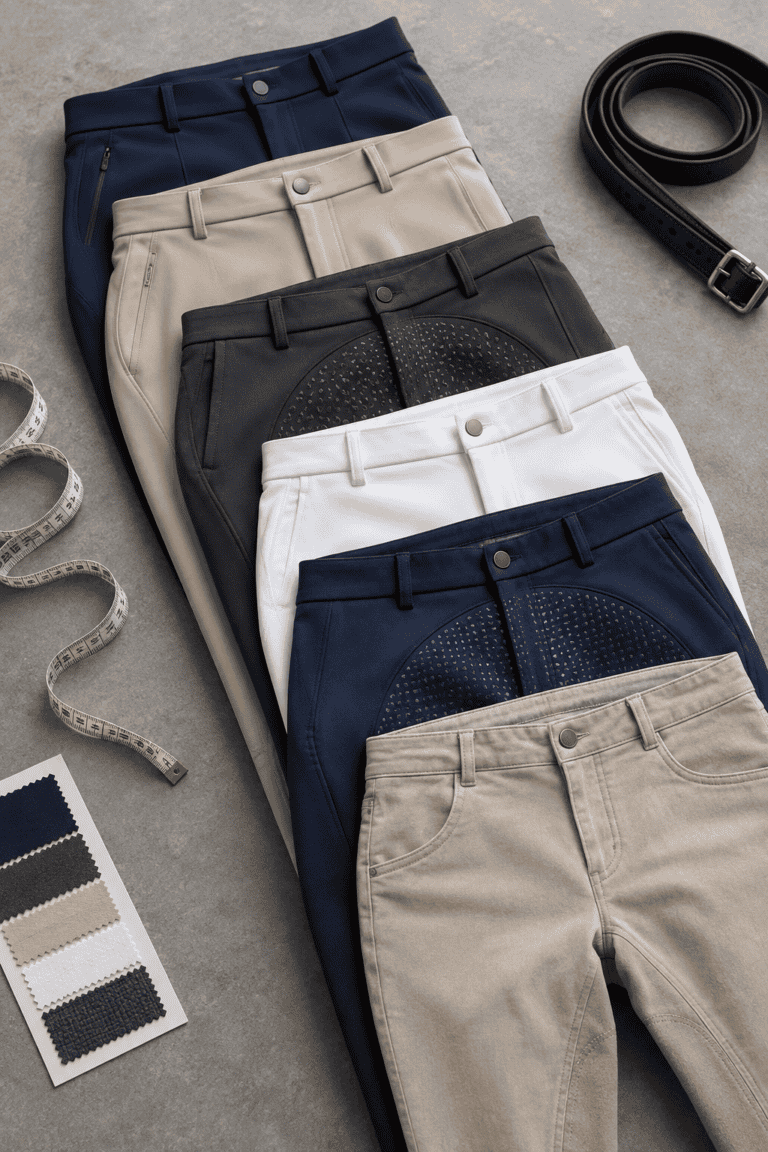
Horze sits under the larger Equinavia umbrella and covers an unusually wide catalogue: rider apparel, saddle pads, stable supplies, general horse gear. The relevant fact about Horze is not its design philosophy — it is its business model.
Horze operates as a high-volume direct retailer with its own house labels, which removes a layer of distributor margin from the price you pay. That is the structural reason the numbers look low, and it is a more useful thing to know than any marketing copy about Scandinavian horsemanship.
What that means practically: Horze is a sensible place to outfit breadth rather than depth. Building a riding wardrobe, kitting out a lesson string, replacing the everyday items that wear out and get replaced on a cycle. It is not where you go for a once-in-a-decade purchase.
Why nobody talks about them: they do not sponsor big-name riders and they do not dominate the trade show floor. A house-label range built for turnover does not generate the kind of brand loyalty that gets discussed at the barn.
4. Big Horn Saddles — handmade fit at a mid-market price
Big Horn’s stated philosophy is straightforward: well-fitting saddles at affordable prices. Every saddle is handmade, combining traditional saddle-making with modern engineering, and riders report saddles lasting a decade of hard use and still fitting comfortably across multiple horses.
Two construction features are worth understanding. Their Sil-Cush line places a silicone cushion along the skirt of the saddle, intended to mould to the horse’s back and shoulders and reduce pressure points while remaining breathable. Separately, Big Horn builds saddles with fibreglass flex trees designed to move with horse and rider through turns while retaining more stability than a treeless saddle offers.
They also specialise in fitting larger horse breeds and unusual back types. If you have been fighting saddle fit on a hard-to-fit horse, this is a brand worth putting on the list.
How to use it: their Lady Light Weight Wide Flex Trail Saddle sits around the $1,000 mark, which places it above the compromised-tree territory we describe in our piece on saddle trees and below the premium flex-tree brands. The used market is also worth watching, since these saddles hold up long enough that secondhand examples still have real life in them.
Why it gets overlooked: they chase fit rather than trends, and fit does not photograph well.
3. Wintec — the synthetic that traditionalists dismiss on sight
Wintec is an Australian company that has been building synthetic saddles since 1986 and has become the global leader in that category. Their saddles use a durable synthetic material that is notably light — the heaviest model comes in around thirteen pounds — comfortable, and built to survive years of hard riding.
The reason to care goes beyond durability, and it is the Easy Change system. Wintec saddles use adjustable Easy Change Gullets that let you alter the width of the saddle yourself, and Easy Change Risers that let you customise panel fit. One saddle can be adjusted to fit multiple horses as their condition changes through the seasons.
That is not a minor convenience. Given that a horse’s back shape shifts with fitness, age and seasonal weight, an adjustable gullet addresses the exact failure mode that makes expensive fixed-tree saddles a poor long-term buy.
How to use it: new Wintec saddles generally come in under $1,000. If you ride multiple horses, or your horse’s topline shifts through the year, the adjustability alone justifies the purchase.
Why it gets overlooked: pure snobbery. Some riders judge synthetic saddles on sight. You will get some judgement from traditionalists — but if it fits the horse and the horse is comfortable in it, that is the saddle.
2. Weaver Leather — Amish craft at mid-range prices
Harry Weaver crafted his first leather halter in 1973 in Mount Hope, Ohio. More than fifty years on, Weaver Equine products are still made there by a team trained in traditional leatherworking, including rope halters made by craftsmen specifically trained in the art of tying.
One sourcing detail is worth being precise about, because it is widely overstated online. Weaver’s ProTack collection uses leather from Hermann Oak, the St. Louis tannery that has been in the business over a century. That sourcing is confirmed for ProTack specifically — it is not a blanket claim across Weaver’s entire catalogue, and you should not assume it applies to every item carrying the Weaver name.
How to use it: Weaver covers all western disciplines, from professional performance and ranch pleasure through to trail and recreational riding. The ProTack collection and the STS Ranch Signature line developed with rodeo competitor Stran T Smith give you professional-grade gear without the professional-grade invoice.
We cover Weaver’s manufacturing operation in more depth in our piece on American-made tack brands.
1. Two Horse Tack — the Biothane case
Two Horse Tack, out of Lexington, Kentucky, builds custom halters, bridles, breast collars and harnesses for all breeds using Beta Biothane. The material is the reason they take the top spot here.
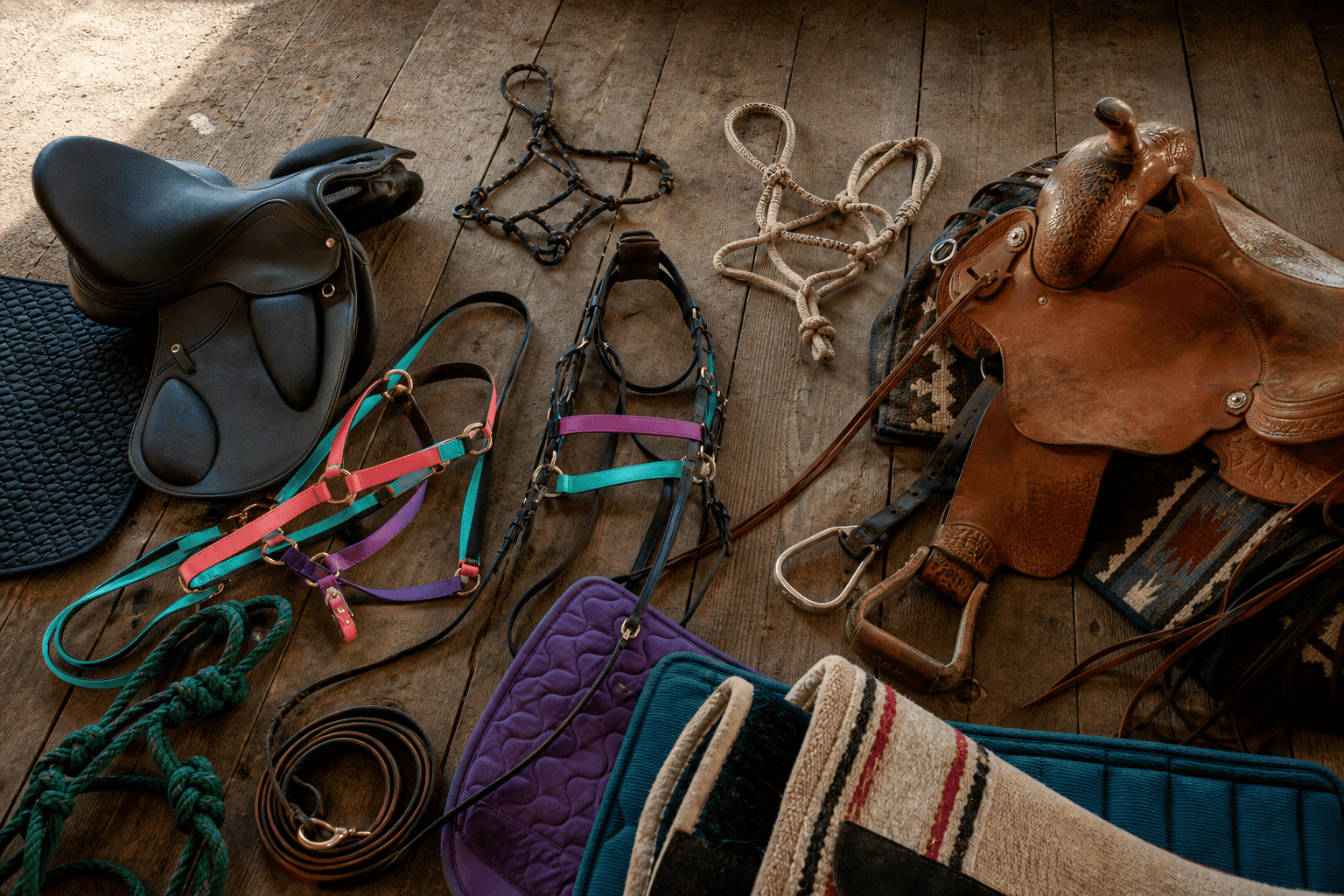
Biothane combines polyester webbing with a protective TPU or PVC coating, producing a composite with genuine strength, strong weather resistance, and maintenance that borders on trivial. You can dunk a Biothane halter in a bucket, hose it off, or put it in a pillowcase and run it through a washing machine. Try that with a three-hundred-dollar leather headstall.
Endurance riders worked this out years ago, which is the strongest signal available: the discipline that puts the most sustained weather and sweat exposure on tack adopted the material first.
How to use it: a halter-bridle runs around $55, against roughly $80 for comparable pieces from other suppliers at time of writing. Beyond price, the practical case is that it requires no conditioning, holds color through sun and rain, and comes in a range of colors leather simply does not offer. If you ride in weather, if you hate cleaning tack, this is your brand.
The company has also run partnerships with equine rescue organisations, using adoptable rescue horses as models for product photography. Details of specific partnerships change over time, so check their current site if that matters to your purchasing decision.
Why it gets overlooked: Biothane does not look like what most riders expect tack to look like. It is not leather and it is not traditional, and that bias costs riders money, time, and barn hours spent conditioning gear that a $55 halter-bridle would have replaced without complaint.
What these five have in common
None of them spend heavily on sponsorship or trade show presence. That is the whole mechanism. The margins on their products are not large enough to justify the advertising budget that would make them familiar, so they stay unfamiliar, and unfamiliarity reads to most buyers as lower quality.
The best tack in the equestrian world is not always behind the biggest price tag. Often it is behind the brands the industry never bothered to promote.
Related on Hoof & Honest: the seven levels of tack spending · synthetic vs leather saddles · saddles for hard-to-fit horses